From Central California and Northern England, two aspiring writers natter and share a blog. We like to talk about our disparate but oh-so-similar lives, offer opinions on literature and movies... and endlessly reminisce about Bioware RPG's.


We hope you haven't had enough of our disingenuous assertions. If you have, please don't hit us.

Tuesday, April 26, 2011

Dragon Age 2's ending: The Last Straw


We're talking about Dragon Age 2. Again.

This will be, I think, the fourth review of Bioware's DA 2 on this site alone. I will make my actual review very quick and then get onto the point of this article - constructive criticism. Yes it will be as smug and deluded as it sounds.

So, a very quick review of a game I'm very interested and emotionally-invested in. This sequel tries a lot of new things to break away from the traditional Bioware RPG plot, and for the most part I think it succeeds beautifully. I absolutely love the party-members and Hawke's relationships to them - they really felt more like friends and less like quest companions. I think the linear, framed narrative is restritive but spectacular - balancing emotion, plot and subtle recurring themes and motifs in a way I've never seen in this medium. I was hooked. And the combat - superb. I prefer it over any combat system Bioware have put out before.

However
... the setting is very poorly designed and far, far too small. The opening to the game (excluding the framed narrative, I would say) is a confusing, dull, poorly-structured mess. And the ending...... well this is what I want to talk about. It killed the game for me - it's broken, short, rushed, meaningless and involves very little role-play. It is - don't pardon the pun, it's awesome - an abomination.

Seven out of ten, but only just.



But what I wanted to blog about is how easily this game could have been saved. I finished the game yesterday and spent an hour or so yelling at the walls about how I, or any fan, could have written a better ending in a day.

So - in order to calm myself down - here's an idea or two for a more competent ending. I'm not saying I'm about to write anything good here, but I guaruntee it will be better than the final, appropriately-titled quest in Dragon Age 2 - 'The Last Straw'. I'm going to try and make this pretty close to the real ending, except for the very first bit. My spin on the tale begins when....

* Flemeth returns. At the Bone Pit, as soon as the high dragon dies by your hand, another one appears. Your weary party is frightened but determined, and you sigh deeply when the dragon transforms into Flemeth, who laughs haughtily. She warns you that your role as Champion is about to be truly put to the test, and that you will have to strengthen yourself and your principles before the day is done. She slinks off in human form. Returning home, you find Bodhan and Sandal leaving your estate for Orlais. They are pleased to have seen you before they go, and they say their goodbyes, giving you one last chance to enchant, buy and sell. There is a note from Orsino or Merdith, begging you to rush to the Chantry.

* You arrive outside the Chantry, to find Meredith, Orsino and one or two templar bodyguards. The two (who, incidentally, really should have been introduced to the plot in Act 1 or 2) are arguing personally and bitterly. Orsino wants to call out the Reverend Mother. Both are armed and it looks like a duel is about to break out. You attempt to either reason with them or goad one on, but just before the reaction you attempt to foster either dawns or fails, Anders shows up.

* Anders makes a speech about Mages' rights. A good speech. A good speech that lasts more than five seconds and is actually very moving. Hell, maybe his voice cracks. Something soft and kind that makes you weep for the mages no matter what your alignment. And then, Justice appears in his eyes. Anders glows blue and gets pissed off. If you have a friendship you can attempt to calm him down, and if you romanced him, you can try even harder. He falters but doesn't stop yelling. The player starts to realise that the dividing line between Anders and Justice / Vengeance has blurred - you hear them both speaking with one mouth, but they clearly agree. They want blood. If you romanced Anders, there is dialogue explaining how this happenned behind your back. Hawke is either hurt, proud or angry.

* At this, Anders makes his move and performs a spectacular, non-demonic spell which completely destroys the Chantry, including several innocents and the high priest. And the player understands how he did it! For a moment, we let the horror of what has happened sink in, then a crowd slowly begins to arrive. Meredith is understandably enraged (not because of a magic sword but because the Chantry just exploded) and invokes some kind of rite, which would massively reduce the personal freedoms and legal rights of all mages in Kirkwall, some kind of Spanish Inquisition-type affair. Orsino is outraged, refusing to let his people accept responsibility for the actions of a single terrorist, and then goes further to demand that the Templars give up control of the city and grant more freedom to mages. They both argue, loudly, dividing the crowd, both making good points. The Champion's party-members arrive too, one by one, appearing behind Hawke and adding their voices to the row.

* Suddenly, Hawke is forced into a decision. Orsino and Meredith's weapons come out, simultaneously, and the player must leap in to save one of them. Hawke is given a choice of dialogue to make his position clear as he lunges, and give one side his support. The party he sides with is struck, surprisingly, not by his/her opponent but by an anonymous dagger or fireball from the crowd. A riot breaks out - mages, Templars and sympathisers battle, with Aveline's guards vainly attempting to break the fights up. The player fights a group of mages or templars, and the fight moves toward the Gallows, spreading throughout the city as it goes. If Hawke does not have a strong friendship with a party-member who disagrees with his decision (Fenris, Bethany, Carver or Merril, say) then he or she leaves to fight for the other side. Whichever leader you supported, Orsino or Meredith, is seriously injured but alive, and is carried to safety by sympathisers.

* Anders runs, a victorious but broken man - but Varric stops him with an arrow, through the leg, perhaps, or pinning him to the wall if that's not too cliche. Hawke takes a moment to speak with him, and the various party members demand that he should be killed, put to purpose on the team, imprisoned or even allowed to go free. If Hawke has a friendship with him, there is an emotional scene where we realise just how far Anders and Justice have fallen in the pursuit of their goal. If Hawke has romanced him there is a very emotional conflict. Hawke can, if the player is careful, convince Anders to repent, and separate from Justice - OR to convince Justice, now Vengeance, to take the body completely and aid you against either side. You must decide Anders' fate - to come with you and attempt to atone, to come with you and then go to the dungeon / be made tranquil, or to die. If he dies and was romanced, Hawke kisses him before killing him.

* Then there is the inevitable fighting. Hawke and his remaining crew battle their way through hightown, lowtown and the docks before reaching the Gallows. Along the way they mainly fight Templars (not an army of demons) if you sided with the mages, or mages (not an army of bloody demons) if you picked the Templars. Maybe there are even some dialogue choices where you can try to save commoners or something.

* When you reach the Gallows, the first thing you find is more fighting. You fight your way to the base-camp of the side you championed - a massed gang of mages or the bulk of the Templars. With no leader they are scared and outnumbered. Hawke delivers a moving speech - a long one, with several directions the player can take it in - and leads them out of the stronghold. At this point, if a party-member left earlier, s/he returns with a gaggle of mages or Templars in tow. Mirroring the earlier fight with the Arishok, there is a duel. The new enemy fights you, does not go down in three bloody hits like Fenris did for me yesterday, and falls. Then begins a war of words, where Hawke and the beaten companion try to convince one another to join them. Hawke can draw on their past to convince them at the last moment, and s/he dies either as a bitter, betrayed foe or a grateful friend. Then there is more fighting as his/her followers attack. Then there is a little rest where you can speak, one last time, with your party-members. If you have a love interest who is still alive, s/he steps up to kiss you before you go. Bethany or Carver, if they are a friend, apologises to Hawke.

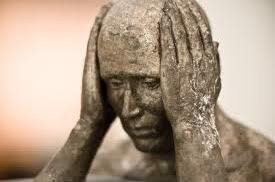
* Finally, Hawke fights the personal guard of either Orsino or Meredith - whoever remains. Orsino absolutely does not suddenly use blood magic, but some of his followers do. There are demons, and they animate the forlorn statues of tortured mages that decorate Kirkwall. If you fight Meredith, the mages on your side animate the staues to fight a vast army of Templars. When all is said and done, there is one more duel. Your opponent, Meredith or Orsino, does not become a monster of any kind, but rather shows a more sympathetic, human side than we have seen from them so far. Between rounds of combat, there is dialogue where you debate the themes of the game. The foe is defeated - either killed or admitting defeat and going into exile. The survivor - Orsino or Meredith - reappears, still wounded. They bitterly regret allowing the conflict to escalate so much, and thank you, offering fabulous rewards. The player chooses whether to accept, granting them the Viscount's crown, or to execute/exile them himself, making himself the new ruler.

* We then return to Varric, who gives a long, long, description of the consequences of all Hawke's decisions to the Seeker. The Ferelden-bred peasant sirrah Hawke has made Kirkwall his home, and truly earned the title 'Champion'. The dark old city-state is now safe from bandits, the Qunari and the Chantry/Circle infighting, thanks to its strong and fair/powerful hero / Viscount.
If the player sided with the mages, then they are granted great freedoms in Kirkwall and eventually Ferelden and beyond - Hawke (and, controversially, Anders) becomes a hero and a new age of magic and co-operation dawns on the Free Marches, the Templars' numbers dwindling.
If the player chose to aid the Templars, then they an the Chantry regain control of Kirkwall and gain strength throughout Thedas. Mages and non-believers are restricted heavily, but a new age of peace dawns. Kirkwall becomes strong and builds an Alliance with Starkhaven. Instances of blood magic and rogue apostates drop sharply, and many lives are saved.
And if the player chose to rule Kirkwall himself, then we get something in the middle. Varric tells the story based on choices and allegiences Hawke made during the game.

And so ends the story of sirrah Hawke and the magic dispute in the Free Marches. The Seeker is surprised and impressed.


Well I feel a lot better now, anyway. Thanks for reading.

If you're slamming a fist on the table and crying, 'Bullshit!' after reading my version
, then well... yeah, I hear you. It's just that - the above is genuinely what I expected to happen all the way through the third act. When the real ending came, I was as shocked as I was disappointed.

The reason I had such a negative reaction to this game, or at least the last few hours of it, is simply because I had such a positive view of the middle.
I adored about 80% of this game, and I was crushed by that trainwreck of an ending.

The real question is - what would you have done differently? How would you have ended this game, or even begun it?
If, like so many people, you felt let-down by Dragon Age 2 - how would you have liked to see that game play out? Do let me know in the comments here, or on the fanfic forum I moderate!

-

Oh. And Bioware? I will work for minimum wage if you want me on DA3. Just saying.

Also - this.

Monday, April 11, 2011

Dragon Age 2: Redeux (My Second Playthrough)


My overall opinion of Dragon Age 2 shifted dramatically once I started my second playthrough, when I realized just how little was changing, how little effect I had on what was going on. I went from "passive approval" to "passively aggressive" concerning this game BioWare delivered, and I found no shortage of people who ended up hearing my rants about the game. (Even if they had no idea what Dragon Age was!) But, you know, I pressed on. I continued with my second playthrough, if only because I wondered just what might happen if I played fast and loose with my mage in Kirkwall. Would the templars eventually be forced to haul me off to the Circle or something to that effect? Would it make me a target in some other way?

In short, just how much really changed my second time through? (Possible spoilers ahead.)

The first obvious change was that Bethany bit it instead of Carver. The reason for this being that if you play as a mage, the majority of your companions would end up being mages if Bethany survived, and vice versa with the two melee classes. It's a shame that I only had as much attachment to the ill-fated sibling as I usually do with Jenkins at the beginning of Mass Effect 1. Maybe less; he really wanted to show the Alliance brass what he could do... and I admired him for that...


Anyway, this provides most of the changes for the first act, since now we're going down into the Deep Roads for Hawke's sake, rather than Bethany's, even though that really wasn't something I'd choose to do. Ever. But I played a long for a while, did the fifty or so quests that pad Act One and got through without much changing, aside from Carver's banter about... things. He always seemed to be frustrated at everything I did, but I never could quite grasp why. Even after he disappears at the end of Act One, none of it really made much sense.

Act Two was a little different. There are some quests in Act One that come back to bite you in Act Two, so I went out of my way to make sure that I responded differently to each one. But on the whole, everything pretty much ended up back where it was before, and I got the same quests under different contexts. For instance, there was one quest that made you decide whether or not to send this mage to the Circle or to the Dalish. Last time, I chose the Dalish, this time I chose the Circle. To my surprise, you're stuck with the same quest to bring him back from the Fade in Act Two, with only one line changed to tell you that he's with the Circle. It didn't make much sense to me. I know there's the illusion of choice, but why layer on a bunch of choices that ultimately amount to nothing?

And I also noticed something else that was a little interesting. Dragon Age 2 really, really wants you to be thrown into moral dilemmas, to the point where it manufactures them based on how you respond to things. Like with Varric's brother, you get to a point where you can either spare him or take revenge on him. The first time I faced him, I wanted revenge, so I chose any response that made Hawke gung-ho to kill the bastard. That certain party member's response was something like, "No, Hawke, I can't do this! I thought I could, but now that I'm here... I just can't kill him." The second time I hit that part of the game, I was feeling a little more generous and voted to let the guy live, and, likewise, that certain party member changed his tone. "I can't let him live, Hawke. After all he's done, I'm not gonna let him walk away!"


The one thing that undoubtedly changed in Act Two was the romance, but that was a given. My Male-Hawke-Rogue romanced Isabela during my first playthrough - which might not work out to well for me in the long run - while my Fem-Hawke-Mage decided she had a thing for elves, and ended up romancing Fenris. Now, my reasons for doing this were twofold. 1) I think Fenris is the best thing to come out of Dragon Age 2, followed closely by Varric, followed closely by nothing. 2) Fenris really doesn't hide his hate for mages during his companion quests and regular banter throughout the game. I thought it would be interesting to see if he would actually fall in love with an apostate without a word for it. To my surprise, he does have something to say about it.


For the most part, Fenris, whose whole reason for existing is to seek revenge on all things magic, just ends up not giving a flip that Hawke is a mage. It's just so funny to watch him dive into these tirades about the evils of magic, of mages, of the abominations they collectively create, while my mage just kinda stands there in the background, possibly pretending like she hadn't just heard what she thought she heard. "What does magic touch that it doesn't spoil?" he says, looking Hawke straight in the eyes. If only there'd been a *cough* option.

Act Three has been something to behold. Lest we forget (or haven't played yet), this is where everything comes to a head. The mages and templars are finally having it out in small ways: a slow build to the inevitable final battle between the two. The slap fight before the battle royale. A mage, an apostate even (possibly even a blood mage depending on your spec), has just become the Champion of Kirkwall after having saved the troubled city-state from the qunari threat. This merited such renown that a statue was built in Hawke's honor, and Kirkwall has become a place where everybody knows her name. They have all felt Hawke's influence because they're alive, and they're alive to feel that influence because of Hawke. She is Paul Revere, George Washington, and Keanu Reeves all wrapped into one.

But that's just not enough to put any part of the mage/templar debate to rest, apparently. Meredith and Orsino both talk to me like I've never casted anything in my life. Scratch that, Meredith did say one thing about my mage-hood (as a threat) and then went about lecturing me about the dangers of magic. Even Anders (during that certain collect quest) talks to me like I'd never known the plight of the mages firsthand. That I just couldn't understand. Ugh.

To summarize, I've made the discovery that Dragon Age 2 just doesn't change much (to state the obvious, after this long post). The decisions that the game poses aren't really decisions because, in the end, most players will end up at Square One, plus or minus their romance option. I can think of very few decisions (aside from the kill or not to kill missions) where your choices actually have a lingering effect. In fact, thinking about what will import over to DA3, I can't really figure out what they'd do!

Best case scenario here: BioWare learned that they can't pull something like this on the fans who have supported them for so long. The unfortunate thing is: we know just a little too well what they're capable of, and when they turn in a product that isn't up to snuff. Dragon Age 2 isn't up to snuff, and I hopefully won't be saying the same thing about Dragon Age 3.

Friday, April 1, 2011

BioWare Apologizes For Dragon Age II. Announces Dragon Age III. (April Fools Joke)

The release of Dragon Age II caused much controversy amongst BioWare fans this year, casting doubt on the future of the series and on the company as a whole. For some players, the repetitive dungeons, the lackluster level design, the lack of structure, the lack of choice, being unable to equip your party members, the removal of origins, the lack of exploration, the lack of character depth, the extensive list of Day One DLC, the disconnect from Dragon Age: Origins, the pointless and ridiculous sidequests, being forced to play as a human, the glitches, the accidental removal of auto-attack for consoles, the minimizing the content, being unable to talk to your party members for most of the game, and the general trend toward zazz over depth, spelled doom to those who had waited to get their hands on the sequel to BioWare's hit RPG.

A company that most believed could do no wrong (myself included), suddenly found themselves pissing off a great many of their fans and consumers.

In an interview with Gamespot, DA2's Lead Designer, Mike Laidlaw, defended the changes to the game, which were made in order to click with an audience that, in his mind, has almost certainly been on the fence about medieval/fantasy/tactical RPGs:

"We wanted to make RPGs, especially fantasy RPGs, accessible, cool, and interesting to people who have been playing RPGs for the last seven years and not realizing that every time they ate food or went for a long run in Grand Theft Auto San Andreas, they were essentially grinding constitution.

To me, that represents a huge audience that may have disregarded RPGs, especially fantasy, as being too hardcore or too confusing."

Perhaps remembering that BioWare already shares a market with the Fable series, World of Warcraft, and their own Mass Effect series, the most accessible RPGs known to humankind, the company has retracted their previous statements, and have extended an olive branch to their dedicated legion of fans:

"We wanted to take this opportunity to thank our many supporters for the veritable mountain of feedback that we've received for Dragon Age II. This title represented an opportunity for BioWare to both experiment and expand in different directions. We didn't want to repeat ourselves; we didn't want to make DA: Origins twice, but we also do not want to disappoint our fans twice.

So, it is my pleasure to announce the production of Dragon Age III. With this sequel, we want to prove that we've heard our fans loud and clear, and that we'll be making a game that will satisfy all of the criticism that's been leveled against us."

The BioWare representative went on to outline the changes that would be made for the much anticipated third entry:

"One of the big things that fans complained about, and reasonably so, was the dungeon that we reused for most of the game. We really didn't think that people would notice , but it just goes to show how perceptive our fans can be. For DA3, we will be solving this problem by removing ALL dungeons and anything that resembles an enclosed area and/or tunnel. We believe this will satisfy any who found dungeon-crawling too tiresome and repetitive in DA2.

Another factor that many took umbrage to was the lack of exploration and depth. We're pleased to say that this, too, has been remedied. In Dragon Age III, you will be able to go anywhere you want.

As long as that anywhere is in Kirkwall. Through your feedback, we determined that the reason most of you were itching to get out of Kirkwall and explore the lands we've put nearly a decade into developing was because the city itself wasn't interesting enough. Dragon Age III will have Hawke, this time with the fixed name "Ethan," returning to Kirkwall just as a catastrophic malfunction forces all of the city's gates to be closed and locked. From there, Hawke will spend the next fifty years exploring the new and improved Kirkwall.

Thanks to an improved engine, and three days' worth of strenuous effort, the city of Kirkwall is more alive than it's ever been. As you can see in this first screenshot, the end result in DA2 was less than perfect. One crowd and bland colors in a city that's supposed to be a city-state with hundreds of years of history to its name?:


We have recognized the folly in this. The city-state of Kirkwall in Dragon Age 3 will be exactly DOUBLE the size of its last iteration, allowing players large instances of roaming with unparalleled freedom:


Amazing! A spectacle of graphical wizardry, if I do say so myself.

Spells and attacks will be mapped to one button. That pesky dialogue wheel and those boring interactive choices will be removed in favor of a "respond" option (which will also be mapped to the same button). Mages, warriors, and rogues will be removed from the game and replaced with a singular, versatile class: the "Lumberjack." Companions will all be replaced by a set of medieval supermodels, male and female, with chiseled abs and large breasts respectively (we were leaning in this direction, anyway). And there will be one boss, one ending, and, also, the game mostly plays itself.

We feel these changes will appeal to all of you, especially to our target demographic: the Grand Theft Auto and Call of Duty demographic. The first piece of DLC for Dragon Age III - which includes a companion with more than FIVE lines of dialogue - will be released May 25, 2011, followed closely by the actual game itself on June 25, 2011.

Thank you for your continued support."

Tuesday, March 29, 2011

DLC Review - Mass Effect 2: Arrival

"The number of people Shepard has just disappointed with this DLC."

Let's say you've made a video game series that has just taken the industry by storm: an in-depth, absolutely gorgeous, and intriguing space opera that has sold millions of copies around the world. While fans hold their breath for the sequel, you decide you want to send this last game out with a bang before the inevitable conclusion to the series: an epilogue, if you will. Wouldn't it behoove you to make a bookend that will just...gosh...blow the player away, so that they have no choice to wait for the next chapter on pins and needles?

Wouldn't it?

BioWare?

...Wouldn't it?

To those of you who have not played this last add-on for Mass Effect 2 - dubiously-named "Arrival," since nothing technically arrives just yet - I'll keep spoilers to a minimum. But, honestly, there's not much to spoil; your best guess is probably better than what this add-on has to offer.

The add-on begins as all of them inevitably do: "You have a new message waiting for you at your private terminal." This time, Shepard takes it in his office, and it turns out to be Admiral Hackett, who contacts you through your...model ship display. I kid you not. Basically, the good admiral needs you to rescue one of his contacts, who has hard evidence of a Reaper invasion and would like her rescued because of this.

But let's back this up real quick and analyse this. First: Why would a model ship display double as a monitor? Shepard has like 100 real monitors at his disposal. Secondly: You have to realize that Hackett is asking you, Shepard, to rescue this scientist because she supposedly has the Reaper's smoking gun. Because, certainly, Shepard has never had any dealings with the Reapers in the past, and has absolutely no evidence to back him up - well, depending. But anyway, Hackett's basically looking you in the eye and saying those two games' worth of action weren't enough to convince anyone (still!), so you'll have to do a bit more.

"Okay," says I. And suddenly everyone forgets that the Alliance Navy spent the entirety of ME2 snubbing Shepard on account of his ties to Cerberus.

But here's the real kicker. Admiral Hackett wants Shepard to go in alone. Why? Because he feels that any more than one person going in and shooting up the place will result in the scientist being killed by her Batarian captors. "Go in alone, or don't go in at all," he tells me. So, perhaps fearing Hackett's omnipotence, I agree. Even though, if it were up to me, I definitely would have brought Garrus along. Just saying.

This kicks off what is essentially an hour's worth of running and gunning, with little substance beyond what occurs in the last ten minutes (and even that wasn't all that impressive). There are no real decisions to make other than to agree eagerly or indifferently. There is one outstanding moral dilemma, but the game will not let you make it since Shepard automatically agrees with the entire thing. So, for pretty much the entire hour, you're on moral autopilot.

And let's not forget the twist, which I found so laughably bad and cliched that I got myself killed from the shock of it.

After being so disappointed by Dragon Age 2, I cannot believe I've been stung twice by BioWare in a single month. This was not the add-on or the epilogue that "Arrival" should have been. This wasn't worth all the promotion, hype, and the little advertisements that were sent along inside copies of DA2. What this $8 add-on amounts to is an hour of shooting guards and a revelation of what might happen in Mass Effect 3, though I doubt it'll be all that impactful, since you're still going to have players who won't get this add-on. The story can't change dramatically for some.

If you've bought all of the DLC and just have to buy this, then I won't stop you, but I can tell you that I was very, very disappointed by "Arrival". Heartbroken, might be a better word. It's a huge shift in quality that I wasn't expecting after the very good "Lair of the Shadow Broker." I find myself saying the same thing after Dragon Age 2. All they had to do was match the quality of the last game (or DLC) and they would've been golden. Instead, they slapped together something for a quick dollar, selling people on their reputation instead of the quality I know they're capable of.

1 out of 5 Stars

Sunday, March 27, 2011

Return to Oz (1985): 15 things that have no place in a sequel to 'The Wizard of Oz'


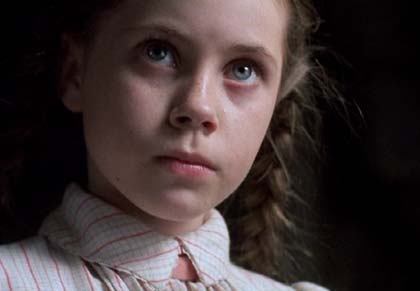
Yesterday I watched the movie Return to Oz for the first time. I'd heard that this was the sequel to the classic, beloved family film - perhaps the quintessential family film - The Wizard of Oz from 1939. I had also heard that the 1985 film was largely unconnected to the first one (taking more of its cues from the original L Frank Baum books) and that it maintained a cult appeal, largely because it was surprisingly scary.

In particular, I had heard that the Wheelers were pretty creepy and had apparently traumatised plenty of viewers.


And yeah, that definitely looks pretty creepy. So, having often been curious about this supposedly unsettling sequel to the most cherished, colourful and heartwarming family fim ever made, I decided to check out these Wheelers for myself.

I mean, the rest of the movie can't be as bad, right? Just look at the cover!


The result is this list:


15 things in 'Return to Oz' which are significantly more frightening than the Wheelers.

Obviously this list will spoil the movie if you haven't seen it. And trust me, seeing it will be far more fun than reading this.

So, in loosely chronological order-


1) Dorothy is taken to a psychiatric clinic.


Within the first ten minutes of the movie (which begins with suspenseful violin and the image of an expressionless, insomniac Dorothy staring hauntingly at the walls at the dead of night) Dorothy is taken to a psychiatric clinic. It's made very clear from the start that the little girl (now actually played by a little girl, just to make it worse) is mentally unstable, and that the events of the first film were probably an hallucination of some sort.

And this doesn't let-up later on. There is no point in the movie where it turns out Oz was real after all. It's left ambiguous.


2) We're off to see the....... electro-shock... therapist...

Before that opening violin has even finished, we're treated to the site of 'Auntie Em' reading a newspaper advertisment that reads, 'Announcement! Electric Healing!'
And, yeah. because of her endless ravings about ruby slippers and tin men and wicked witches (you know, our childhoods) Dorothy is literally carted-off to a turn-of-the-century psyichiatric hospital to be electro-shocked. By Auntie Em. Later in the movie, we see her being strapped into the contraption and then left alone. She escapes before the therapy can begin, thank God, but this is the movie's only mercy.


3) Dorothy, as written by Christopher Walken.

This was probably in the books, but just check out what our heroine, the sweet and kind Dorothy, tells her therapist.

The tin woodsman used to be made of flesh, like everybody else. But then he cut off his leg... he had a tin leg made, but then a witch enchanted his axe. And he kept on... cutting off all the other parts of his body, until he was all made of tin. Even his head was...


And at this point the therapist stops her, possibly in order to avoid soiling himself.


4) The sequence that launched a thousand J-Horror movies.

While we're still in the hospital, we get lots of little clues / parallels as to what will happen in Oz. You know, to set up the inevitable 'And you were there! And you!' scene at the end. There is a pumpkin, a chicken, a machine with a face. It's symmetry within the plot, setting-up the characters who are to come later - and... uh, adding weight to the implication that her adventure really is nothing but delusion. Fun for kids.

But while her doctor is explaining about the modern marvel of electric shocks, Dorothy seems to drift off... and the voice of the doctor fades... and the god-damned violin returns... and she sees the face of another girl in the mirror. Staring. Emptily. And Dorothy looks into its dead eyes... and gives the subtlest of smiles. And the violin swells... and she's interrupted again.

The rest of the scenes in the clinic are just classic horror. The mysterious girl in the mirror appears in Dorothy's room and says, 'It's Halloween soon' and it gets worse from there on. There are some very unsettling desolate, drawn-out suspense shots here, including a great one with a creaking door and a gradual zoom-in on Dorothy's empty, emotionless face.


Oh! And every now and again you hear screaming mental patients in the background.


5) A drowning child.

After the agony of the slowly-strapping-Dorothy-Gale-Into-An-Electric-Chair scene, she and the mysterious girl from the mirror manage to flee the building and escape to the storm outside. Persued as they are by the Gestapo-style matron, they immediately hurl themselves into the swelling lake nearby. After several minutes of the pair frantically trying to grab onto something in the rushing water at the dead of night, the mirror girl drops under the water and doesn't come back up.
Now later she returns, as 'Ozma of Oz'... so if we assume that Oz is real, then don't worry she's okay. But if we assume Oz is not real... and remember, the movie never gives us a straight answer... then we just watched a little girl drown.

No catchy musical numbers, yet. Still hoping.


6) Demonic voices and faces in the wall.

Dorothy wakes up, finally, in the Merry old Land of Oz, and thank God, it's colourful and pleasant. There is even whimsical music. She finds a talking chicken who tells jokes and picks from a 'lunch pail tree' - awww! And then faces start appearing on the rocks, and we cut to the same faces reappearing in a hell-like scene, distorting themselves across flickering, red, stone walls, telling an unseen character with an unhumanly deep voice that 'She has returned'. Oh.


7) Your childhood memories in ruins.

As Dorothy and the chicken sidekick set off to find any sign of life in Oz (no, honestly, that seems to be their quest) they encounter the symbolic wreckage of the yellow brick road. After another scene with Satan and the Posessed Rocks we see the heroes have reached the Emerald City... much quicker than they did last time. The city is now an eerie, ancient ruin, with no emeralds in sight, or indeed people. There are numerous chalky, semi-collapsed statues of people, some of them without heads, some cut in half at the waist, the others bearing frozen expressions of horror. The tin man and the cowardly lion are there too, having suffered the same fate. No word yet on the scarecrow or Glinda the good witch, who we are left to assume were eviscerated by Jason Voorhese. Also it's at this point that the Wheelers appear and try to kill Dorothy. She escapes and finds a new sidekick, 'Tic Toc' the comical robotic soldier who proclaims, 'I am not alive, so I cannot be sorry or happy'. More on this later.


8) Princess Mombi.

Princess Mombi is the personification of my nightmares.

The Wheelers are her private army, and she's some kind of overlord who lives alone in a giant palace playing a bouzouki, surrounded by a gallery of beautiful, female human heads. She has long ago removed her own head, and now wears those of her murder victims, which take on her personality the moment she attaches them to her neck, and otherwise wait in obedient silence with their eyes closed. Usually. After the headless body of the Princess explains the situation, she attaches a new head and announces plans to keep Dorothy a prisoner, until she is an adult and thus able to provide her with a new, pretty head.


9) Jack Pumpkinhead.

Inside Mombi's dungeon, Dorothy and her freakish, unlovable cohorts meet the latest and most horrific of that number - Jack Pumpkinhead. This is a tall, gangly man with a carved pumpkin for a head, a distorted sense of identity and the voice of a serial killer, specifically Norman Bates. Seriously, he sounds just like Norman Bates! And better yet, he believes Dorothy is his mother. For me, this was the height of the movie's horrors - just after seeing Mombi's living decapitation gallery, to suddenly see Jack crouching down toward a small girl and whispering, 'May I call you Mom?' sent me right over the edge. And he keeps calling her that all the way through the movie.


10) The Wizard of Oz 2: Dead By Dawn.

As they flee the Princess (don't get me stated on that - it involves a headless, animatronic woman jutting out of her bed) the heroes enlist the help of the 'gump' - a trophy deer head which they have reanimated against his will in order to help them. They connect the gump to a sofa with improvised wings. Quite rightly, the Frankensteinian monster asks them, 'What am I?' Dorothy replies, 'You're just a thing.' Quite. Tic-Toc then says they should keep flying until dawn. They won't make it 'til dawn.

This scene ends, brilliantly, with the whispered line, 'Good-night, mom...'


11) The Nome King.


The Nome King is not a gnome, and hardly a King since he seems to have no subjects beyond Mombi, her Wheelers and the claymation faces in the rocks. Because everyone else in Oz is dead. He is the one responsible for the current, horrible fate of the land, as he explains when he introduces himself to the heroes. Because the Emerald City was built with emeralds, which he apparently owns, being a spirit of the rocks... he views the city's construction as theft, and he does a fairly good job of convincing us of the cold, just logic of his coup.
Also, his face becomes more and more human-looking with every life he takes. And he has the scarecrow held prisoner in Limbo. And he has stolen the ruby slippers. And he is wearing them.


12) He chose... poorly.

After taking them prisoner and inviting them to drink hot liquid silver, the Nome King forces our heroes into a challenge - they must view his 'trophy room', in which every trophy is the distilled soul of a citizen of Oz, and work out which one holds what remains of the Scarecrow. If they choose incorrectly, they become his latest trophies. And all but Dorothy choose incorrectly. The comical robot Tic-Toc actually cries before the stress of the situation causes his body to break and shut-down. Before he makes his choice he also says, 'I have always valued my lifelessness.'
I have always. Valued. My lifelessness.


13) Honour or Madness?

Before making her choose her ornament, the Nome King offers Dorothy another tough decision:

Nome: You don't have to go down there. I could use the ruby slippers and send you home. And when you get back, you will never think of Oz again.

Dorothy: But what about my friends?
N: Forget about them. You can't help them now. (pause) There's... no place... like home!!

And with this, the last remnant of good feeling about The Wizard of Oz is eradicated forever.


14) The Death of the Nome King.

By confusing means, Dorothy, Jack and the other abominations manage to beat the Nome King at his own game, whereupon he ceases to toy with them and transforms into a massive, red stone monster. The fires of hell surrounding them, they watch helplessly as he laughs hysterically in his demon voice and slowly lowers Jack into his enormous, gaping jaws.


Jack survives and the King dies, horribly. And this is the end of things, here. The rest of the film is relatively non-threatening. Dorothy restores the murdered peoples of Oz to life and in thanks, the shell-shocked Tin Man and Lion wordlessly hug her. She wakes-up to find that the mental clinic has burned down, killing the doctor with the shock therapy machine. Y...ay?

-------

So there you have it! I hope I've brightened-up the Wheelers' reputation, if only by comparison. Sure, at one point they corner Dorothy in a tunnel whilst cackling and threatening to 'cut her into shreds', but as you've seen - this is nothing compared to the everyday waking nightmares within the wonderful, charming, Technicolor world of Oz.

And also-


15 - This.

This.


----------------
----------------

Return to Oz is highy, highly recommended, but not for unaccompanied children.